
Texas, private property
Dead Raccoon Removal in Texas
Texas law places the raccoon among the fur-bearing animals, with the skunk, opossum, fox and others (Parks and Wildlife Code §71.001(1)). The statewide rabies quarantine in 25 TAC §169.34 makes it unlawful to transport any live fox, skunk, coyote or raccoon into, out of or within the state. This page is for a raccoon found dead on private property. The body is collected and goes for disposal, and no one keeps it.
What does Texas law say about a raccoon, dead or alive?
Parks and Wildlife Code §71.001(1) defines a fur-bearing animal as wild beaver, otter, mink, ring-tailed cat, badger, skunk, raccoon, muskrat, opossum, fox or nutria. That is a classification, and this page stops there on possession.
For a live raccoon the rule on file is the statewide rabies quarantine, 25 TAC §169.34. It declares the whole state a quarantine area. It makes it unlawful to transport animals subject to the quarantine from, to or within Texas. The animals named are any live fox, skunk, coyote or raccoon of a species indigenous to North America or established there. The rule lists its own exceptions. This site does not route a request about a live raccoon.
A dead raccoon on private property is what this page handles. If an independent operator serves that address, the carcass is picked up and taken for disposal. No part of it stays behind or goes anywhere else. A bite or scratch brings in the rabies report described below. The general rules for carcass disposal are in the Texas disposal rules guide.
Source: 25 TAC §169.34 Statewide Quarantine, read on the Texas Secretary of State portal, checked 2026-11-24.
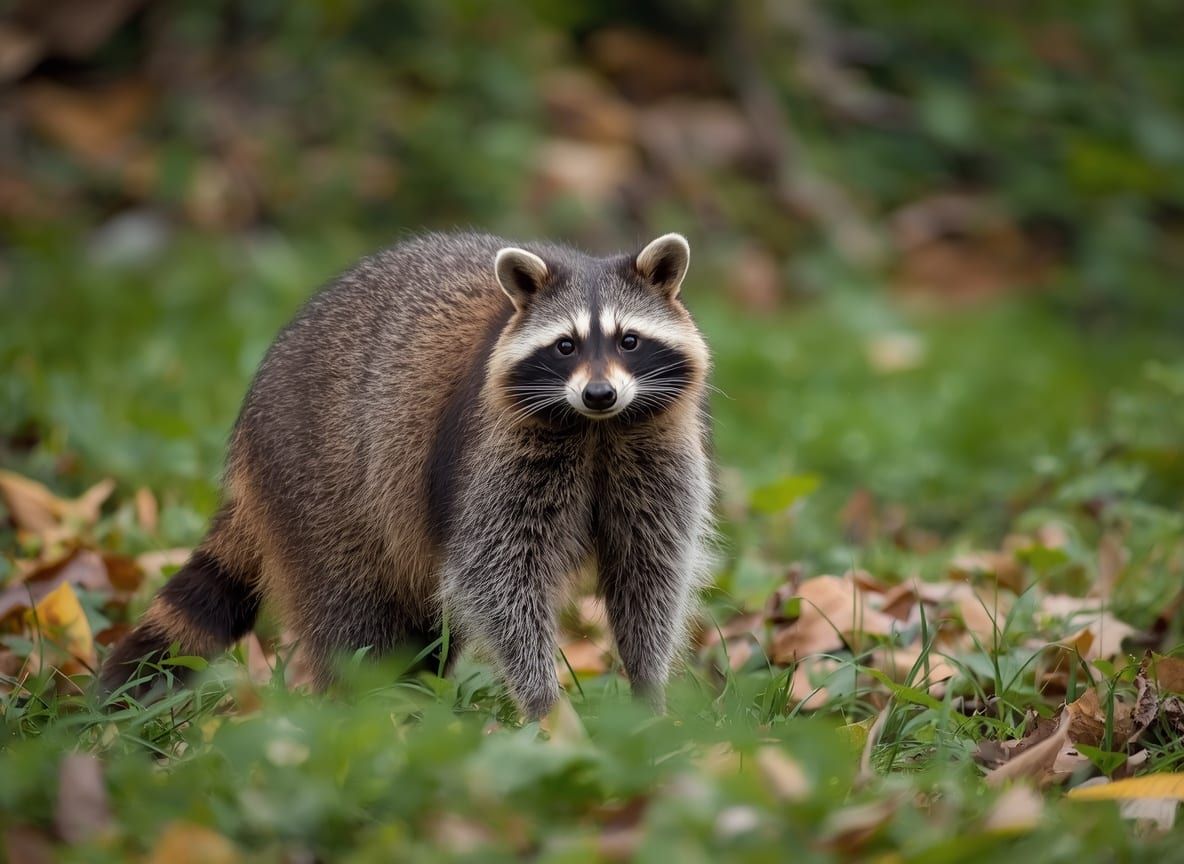
Before anyone is called Settle three things. First, whether the raccoon is dead; a live one is not routed here. Second, whether it bit or scratched anyone, or whether rabies is suspected. Health and Safety Code §826.041(a) requires that to be reported to the local rabies control authority for the county or city where the exposure happened. Third, where it is: on the lawn, under a deck, in an attic you can enter through the hatch, or shut inside a wall. A carcass inside a closed wall is information only on this site.
Cases this page is for
- A dead raccoon on a lawn, patio, driveway or flower bed
- A raccoon under a deck, porch or shed where the gap can be reached from outside
- A raccoon in an attic that is entered through its existing hatch or stair
- A raccoon in a crawl space with an open access door
- A raccoon in a garage, barn or outbuilding on residential land
- A raccoon in a pool, pond or gutter on the property
What falls outside it
A live raccoon, healthy or sick, is not routed through this site. A raccoon shut inside a wall, ceiling or floor cavity is information only here: operators leave every finished wall, ceiling and floor intact, and the wall article covers that case. Anything about how raccoons got into a roof, or how to keep them out, is not offered. Pets and livestock fall outside the site. A smell with nothing in sight has its own page.
Reach decides the request. A raccoon in the open, under a deck with a gap, or in an attic entered through its hatch can be collected. One inside a closed wall sits behind finished material that no operator is sent to cut through. That case stays information only on this site.
How long the smell of a dead raccoon lingers depends on how big it was, how hot and humid the space is, how much air moves through it and where the body lay. No figure in days is given here, and none should be assumed in the other direction either.
From request to disposal
- Calls go to the site's routing line. Forms are sorted by ZIP code and passed to an independent operator that takes that address, if there is one.
- The operator asks whether the raccoon is dead, where it is and what the access looks like.
- You and the operator agree the price and the timing. This site is not party to either.
- The body is removed and goes for disposal. It is not kept by anyone.
About this animal
What does Texas law call a raccoon?
A fur-bearing animal, by Parks and Wildlife Code §71.001(1), which lists the raccoon with the beaver, otter, mink, ring-tailed cat, badger, skunk, muskrat, opossum, fox and nutria. This page states the classification and nothing more.
Does the rabies quarantine apply to a live raccoon?
Yes. 25 TAC §169.34 declares a statewide rabies quarantine. Transporting any live fox, skunk, coyote or raccoon from, to or within Texas is unlawful under it, with exceptions for the officials and other categories the rule names. This site does not route requests about a live raccoon.
Who must be told if the raccoon bit or scratched someone?
The local rabies control authority. Under Health and Safety Code §826.041(a), a person who knows of a bite or scratch capable of passing rabies to a person, or who suspects an animal is rabid, must report it. The report goes to the authority of the county or city where the person lives, where the animal is located, or where the exposure happened.
Does anyone keep the raccoon after it is removed?
No. The carcass goes for disposal and the matter closes there. State law counts dead animals as municipal solid waste (Health and Safety Code §361.003(20)), and 30 TAC §330.3 lists them as a special waste as well.
Is a dead raccoon inside a wall covered?
Not as a removal. A carcass shut inside a wall, ceiling or floor cavity is information only on this site. Operators leave finished walls and ceilings intact. The article on a dead animal in a wall sets out what can and cannot be known from the smell alone.
What happens if the dead raccoon is under the deck?
If the gap under the deck can be reached from outside, the carcass can be collected. If the space is closed in, that is for the operator to judge on site. The under-house page on this site describes the line between the two.
Where on the property
- Under the house or deckA carcass under a deck, porch, shed or raised house, reached through the gap or skirting opening the structure already has, by an independent operator where one covers the address.
- In the atticA carcass lying on the insulation, decking or ductwork of an attic, reached through the hatch or pull-down stairs the house already has, by an independent operator where one covers the address.
- Smell, nothing visibleThe smell is certain and the carcass is not in sight. This page sorts a reachable carcass, which an operator can take, from a sealed-cavity smell, which is information only.
Whose job is it? Who removes it · Disposal rules · Dead deer
By area: Harris County · Montgomery County · Dallas · Austin