
Texas, private property
Dead Deer Removal in Texas
Texas law lists the white-tailed deer and the mule deer as game animals (Parks and Wildlife Code §63.001). Once a dead deer is moved, TPWD's rule 31 TAC §65.88 fixes where it may go. The choices are a landfill permitted by TCEQ, interment at least three feet below the ground surface under at least three feet of earth, or the property where it was harvested. This page covers a deer found dead on private property and taken away for disposal.
What happens to a dead deer removed from private property in Texas?
It leaves under TPWD's deer carcass rule, 31 TAC §65.88. The rule reaches a white-tailed or mule deer moved from the place where it was killed or found. It allows three disposal methods. The first is transport to a landfill permitted by TCEQ to receive such waste. The second is interment, meaning the carcass parts are placed at least three feet below the ground surface and immediately covered with at least three feet of earth. The third is return to the property where the animal was harvested. Rendering is not a lawful method of disposal (subsection (c)). Disposing of the parts not retained in any other way is an offense (subsection (e)).
A deer collected from a yard through this site goes out for disposal in full. No part of it is retained by anyone. A deer on a road, or a deer struck on a road, is not routed here; that is a matter for the agency that maintains the road. The Texas dead deer guide holds the longer record.
Source: Texas Parks and Wildlife Department rule, 31 TAC §65.88, read on the Texas Secretary of State portal, checked 2026-11-24.
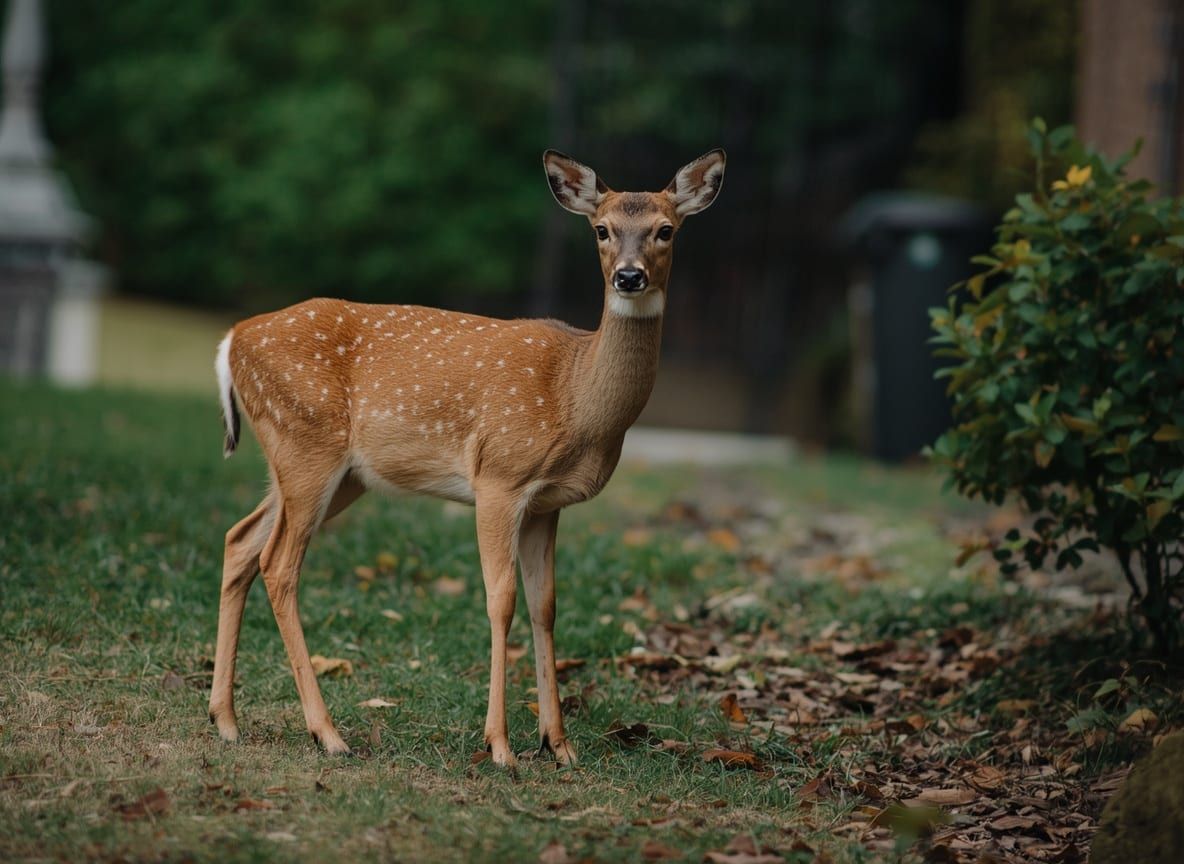
Before anyone is called Confirm the deer is dead and lies on private ground: a lawn, a lot, a fenced yard, a pasture edge. A deer on a road, a shoulder or the ditch beside one belongs to the agency that maintains that road, and this site does not route it. Note the spot in plain words: open grass, a slope, a creek bank, the space under a raised deck. That tells the operator what the lift involves and whether a gate or a vehicle path is open.
Cases this page is for
- A deer found dead on a lawn, driveway, lot or fenced yard, reached on foot
- A deer at the edge of a pond, creek or drainage swale on private land
- A deer on a slope or in brush where it can be carried or dragged to a vehicle
- A deer under a raised deck or open-sided structure, reached without taking anything apart
- A deer that died against a fence line or inside a pen on residential land
What falls outside it
A deer lying on a road, shoulder or median, or a deer struck on a road, is not routed through this site; the agency that maintains that road is the contact. A live deer, hurt or not, is outside the site entirely. The remains of pets and livestock are not routed through this site either. A smell with no deer in sight belongs to the odor page.
A deer is the heaviest animal this site lists. Whether one person can lift it, or whether it must be dragged on a tarp to a vehicle, depends on its size, the ground and how close a vehicle can get. The operator settles that on site, with you, before any price is agreed.
How long a smell lasts after a deer is removed depends on its size, the heat, the humidity, the air movement and how long it lay there. No count of days is offered on this site, in either direction.
The order of events
- You call the site's routing line or send the form. A form request is matched by ZIP code to an independent operator, where one covers that address.
- The operator confirms the deer is on private ground and asks where it lies and how it can be reached.
- Price and timing are agreed between you and that operator. This site sets neither.
- The carcass is removed and taken for disposal by a method the rule allows. Nothing from it is kept.
About this animal
What does Texas law call a deer?
A game animal. Parks and Wildlife Code §63.001(a) lists mule deer and white-tailed deer by name, with pronghorn antelope, desert bighorn sheep, three squirrel species and javelina. The listing is a classification. This page takes nothing further from it about possession.
Who handles a dead deer on a road?
The agency that maintains the road. This site does not route requests for a deer on a road, a shoulder or a median, or for a deer struck on a road. The Texas dead deer guide on this site describes the road route in more detail.
Does the operator keep any part of the deer?
No. The deer leaves the property for disposal, and that is where the record ends. TPWD's rule names the lawful destinations: a landfill permitted by TCEQ, interment at least three feet below the ground surface and at once covered with three feet of earth, or the harvest property. Rendering is not among them.
Is rendering a lawful way to dispose of a deer carcass?
No. Subsection (c) of 31 TAC §65.88 states that the rendering of carcass parts is not a lawful method of disposal. The rule was last amended effective May 11, 2026.
What happens if a deer carcass is dumped somewhere else?
Subsection (e) of the same rule makes it an offense to dispose of the parts not retained except by the three listed methods. Separately, Health and Safety Code §365.012(c) makes it an offense to transport solid waste for disposal to a place that is not an approved solid waste site.
Is there a deadline in Texas law for removing a dead deer from a yard?
None of the Texas statutes or state rules we reviewed sets one for a wild animal carcass on residential property. Health and Safety Code §341.012(a) requires a person to abate a public health nuisance on property they possess as soon as they know it exists. The statute does not say when a carcass becomes one.
Where on the property
- In the yardA carcass lying in the open on a lawn, bed, patio or driveway, with the curb options two Texas cities publish and the operator route for everything else.
- Dead animal removalPickup and disposal of a carcass lying where it can be reached on private property, by an independent operator where one covers the address.
- CostThe five things that move the price of a carcass removal on private property, with no figures, because the quote comes from the independent operator who covers the address.
Whose job is it? Who removes it · Disposal rules · Dead deer
By area: Harris County · Montgomery County · Dallas · Austin